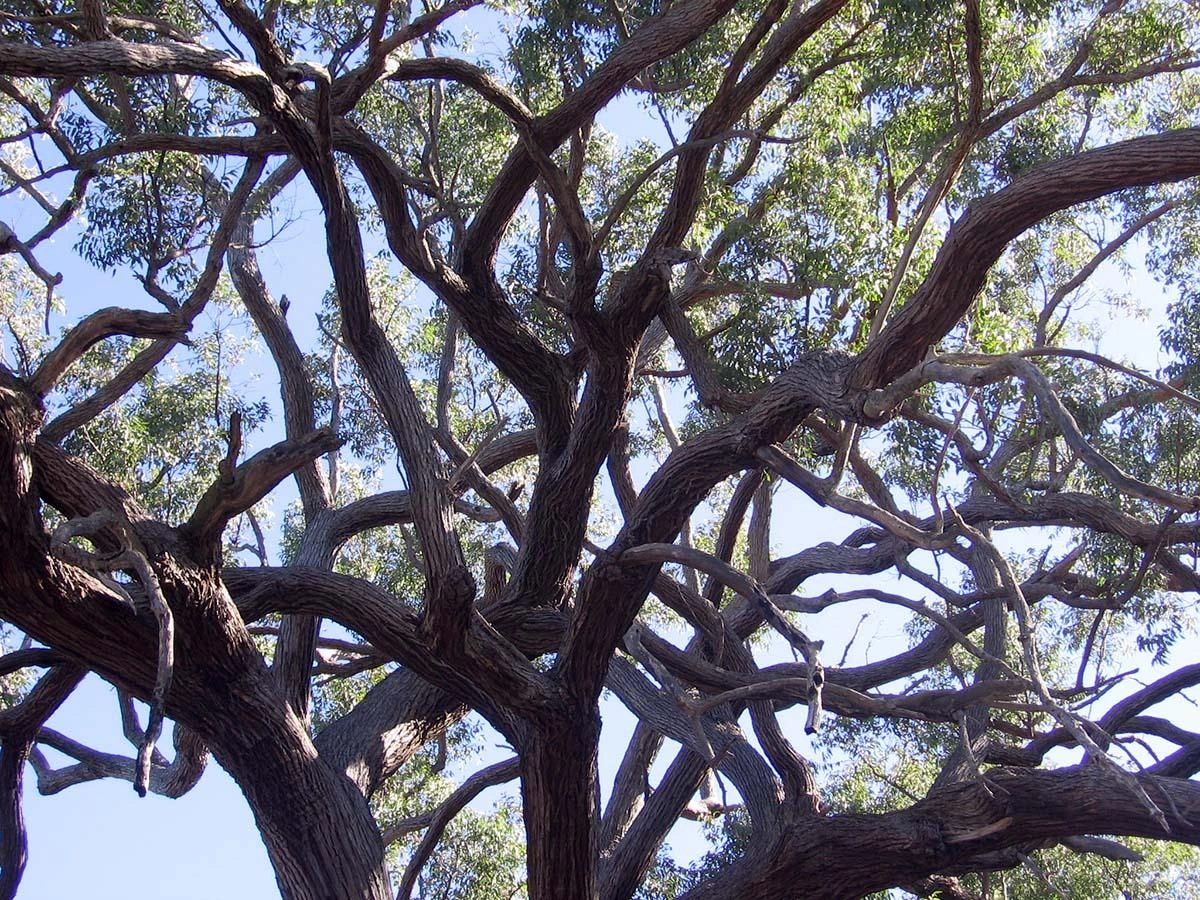
BLACK COCKATOO HABITAT
THE TREES WERE MEANT TO STAY
An investigation into the Maryville Heights Tree Preservation Area, its importance to threatened Black Cockatoos and the proposed Gonneville infrastructure corridor.
More than a decade ago, mature native woodland at Maryville Heights in Lower Chittering was formally identified for preservation. Planning documents recognised potential Black Cockatoo nesting trees and required environmental management measures to protect the area's natural values.
Today, this same landscape faces potential disturbance from a power, water and access road infrastructure corridor proposed by Chalice Mining.
An examination of the original planning records, environmental survey correspondence and subsequent on-ground observations reveals a significant concern: the relevant Tree Preservation Area was never physically accessed by Chalice's environmental survey team.
THE ORIGINAL CONSERVATION COMMITMENT
The Maryville Heights Modified Development Plan, endorsed by the Western Australian Planning Commission and adopted by the Shire of Chittering in 2013–14, specifically identified Tree Preservation Areas and potential Black Cockatoo nesting locations.
Condition 3 restricted vegetation clearing and required specific Council approval before removing potential Black Cockatoo nesting trees shown on the plan.
Condition 18 required an Environmental Management Plan to protect environmental assets, expressly including Carnaby's Cockatoo habitat.
These conservation provisions were also reflected in subdivision documentation and, according to affected landholders, on property titles.
Although the current enforceability of individual planning conditions and title provisions requires separate consideration, their original purpose is clear. The mature woodland was considered important enough to preserve as part of the residential development.
The significance of these protections becomes apparent when examining what occurred during the subsequent environmental investigations.
THE TREE PRESERVATION AREA WAS NOT ACCESSED
Correspondence received by affected landholders confirms that the environmental survey team investigating Chalice's infrastructure corridor did not physically access the relevant Maryville Heights Tree Preservation Area during the investigations described.
Not in 2024.
Not in 2025.
Not in 2026.
Instead, the area was assessed using desktop methods, relying upon information such as aerial imagery, vegetation mapping and existing environmental records.
While desktop assessments are an accepted component of environmental investigations, they cannot reliably establish the presence, condition or occupancy of previously unrecorded nesting hollows.
During a subsequent, separate on-ground visit, an experienced arborist accompanied by a specialist familiar with Carnaby's Black-Cockatoos inspected mature trees in the area.
Within the first hour, several tree hollows had been identified.
Not every hollow is necessarily suitable for breeding or currently occupied. Nevertheless, their discovery demonstrated the importance of physically examining mature trees.
Local observations and monitoring also indicate numerous active natural Black Cockatoo nesting hollows within the surrounding Chittering bushland. Detailed locations and supporting evidence are being withheld from public release to protect the birds.
These findings highlight the limitations of relying on desktop information in a landscape containing mature woodland and potentially significant breeding habitat.
A BREEDING LANDSCAPE OF EXCEPTIONAL IMPORTANCE
The importance of the wider Chittering–Julimar region is documented in government conservation records.
The Western Australian Government's 2013 Carnaby's Cockatoo Recovery Plan identified the Bindoon–Julimar Important Bird Area as supporting at least 110 breeding pairs, describing it at the time as the largest recorded breeding population in south-western Australia.
This historical figure applies to the wider region rather than specifically to Maryville Heights. However, it establishes the broader landscape's considerable conservation significance.
Carnaby's Black-Cockatoos are seasonal breeders, with females often returning to familiar breeding areas and established natural hollows over successive seasons.
A breeding pair generally raises only one chick each year. Successful reproduction depends upon suitable nesting sites, adequate food and access to water.
The Commonwealth's Black Cockatoo referral guidelines recognise that nesting trees are part of a wider habitat system incorporating feeding and roosting areas.
Consequently, disturbance to surrounding woodland can affect breeding birds even where individual nesting trees remain standing.
NATURAL HOLLOWS: MORE THAN A CENTURY IN THE MAKING
Unlike many smaller birds, Black Cockatoos cannot construct their own nests. They depend upon cavities that develop naturally inside mature trees.
The WA Department of Biodiversity, Conservation and Attractions (DBCA) explains that trees can take more than 120 years to develop hollows suitable for Black Cockatoos.
Some take considerably longer.
These hollows form through decades of growth, weathering, limb loss and decay. Once suitable, they may provide breeding opportunities over many seasons.
Artificial nesting hollows can assist conservation efforts, particularly where natural hollows are scarce. However, DBCA explicitly cautions against using artificial hollows to justify removing natural hollow-bearing trees.
Its guidance also notes that Forest Red-tailed Black-Cockatoos, which are regularly observed in Chittering, appear to use artificial hollows far less frequently than Carnaby's.
An artificial nesting tube cannot reproduce the full ecological functions of a mature Wandoo, Marri or Jarrah, nor replace the surrounding woodland upon which these threatened birds depend.
The loss of established natural nesting habitat therefore represents considerably more than the removal of individual trees.
THE GONNEVILLE CONNECTION
Chalice Mining is an exploration and development company that has never brought a mine into commercial production.
Its proposed Gonneville Project remains subject to environmental assessment and the approvals necessary for development.
According to Chalice's published development timetable, major environmental approvals and a final investment decision are targeted for 2028, with first production anticipated in 2030. These remain company projections rather than guaranteed outcomes.
Nevertheless, the proposed infrastructure extends well beyond the mine site, introducing the prospect of construction activity and long-term infrastructure into established rural and environmentally significant landscapes.
At Maryville Heights, this includes land subject to an earlier conservation framework, within a region recognised for its importance to threatened Black Cockatoos.
The ecological values are established. The mining project remains unapproved.
OUR FINDING
The original Maryville Heights planning documents demonstrate that tree preservation and Black Cockatoo habitat were explicitly considered during the subdivision approval process.
Government conservation records establish the exceptional historical breeding significance of the wider Bindoon–Julimar landscape.
Yet correspondence obtained by affected landholders confirms that the relevant Tree Preservation Area was assessed without physical access by Chalice's environmental survey team during the investigations described. A subsequent separate inspection identified several hollows within the first hour.
Together, these findings raise concerns about the completeness of the environmental information available for this sensitive part of the proposed infrastructure corridor.
Natural hollow-bearing trees are not readily replaceable assets. Their ecological value has developed over generations and extends to the wider habitat supporting threatened wildlife.
The Maryville Heights woodland was identified for preservation long before the Gonneville Project was proposed. Its environmental importance has not diminished simply because a mining company now proposes infrastructure through the area.
