
FORCED TO FIGHT?
YOUR LAND. THEIR MINE. YOUR LEGAL BATTLE?
How much should a family have to spend defending a home they already own?
Imagine working your entire life to buy a property, building your dream home, raising your family, caring for animals and protecting the wildlife that shares your land.
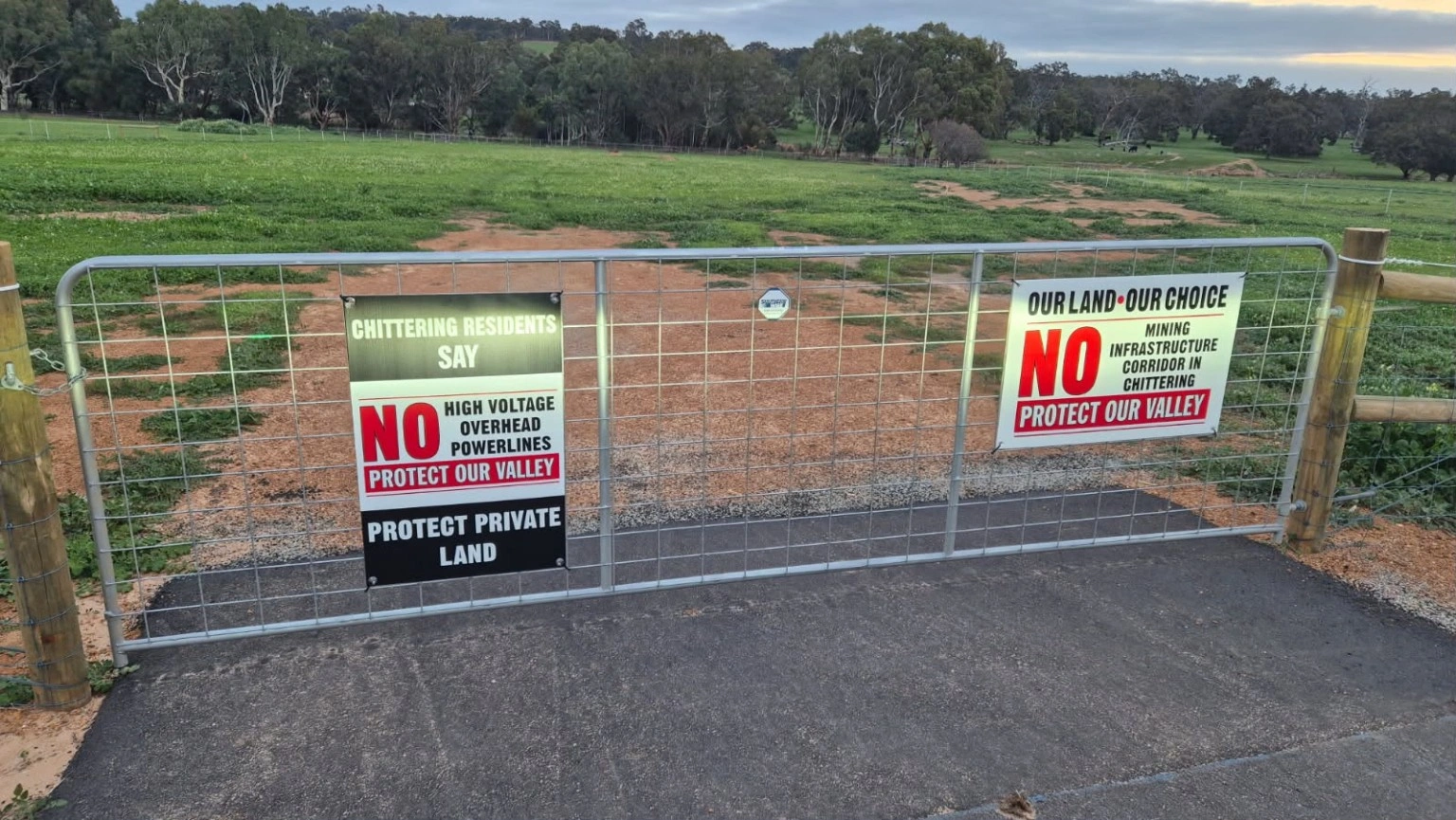
Then discovering that a mining company wants to establish an infrastructure corridor through your property, potentially changing the place you've worked so hard to create.
You didn't invite the development. You don't want your land used for it. Yet formally challenging the proposal could mean engaging a lawyer, entering Warden's Court proceedings and potentially facing cross-examination at a contested hearing.
For some families along Chalice Mining's proposed Gonneville infrastructure corridor, this is no longer an abstract concern. It is a legal and financial possibility they are already having to consider.
These are ordinary people whose homes, savings, retirement plans and way of life may be affected by infrastructure serving a private mining development.
And the most confronting part?
Chalice explains this very process in its own Landholder Guide.
WHAT CHALICE'S OWN DOCUMENTS REVEAL
In its April 2026 Landholder Guide, Chalice Mining sets out what happens when a landowner formally objects to a proposed mining tenement.
The matter proceeds through the Warden's Court process. If negotiations fail and the objection reaches a contested final hearing, landowners may be required to prepare formal evidence, make legal submissions and face the cross-examination of witnesses.
Yes, cross-examination. In a courtroom. Over land they already own.
Think about what that means for an ordinary family.
Someone who has spent decades building a home, raising animals or protecting native bushland could find themselves giving evidence and answering questions in formal legal proceedings involving a mining company.
People who may never have stepped inside a courtroom could be expected to navigate complex mining legislation and defend their concerns through a legal process they never imagined having to face.
Not every objection will reach a final hearing. Some may be resolved through negotiation.
But the prospect of being questioned in court simply because you are trying to protect your home and property is confronting enough.
WHO PAYS FOR THE LEGAL BATTLE?
Perhaps the most disturbing part of Chalice's Landholder Guide appears on page 14.
Landowners are generally responsible for paying their own legal costs.
A lawyer is not compulsory. But facing a mining company in formal legal proceedings, with complex legislation, technical evidence and strict procedures, is hardly something most families would feel equipped to handle alone.
And legal representation does not come cheaply.
Every consultation, document review, letter and hour spent preparing a case could add to the bill. For families already managing mortgages, living expenses, property maintenance and retirement savings, those costs may become an enormous burden.
Money that was never intended for a legal dispute. Money that families have worked years to save.
Then there is the pressure of continuing. Chalice's guide confirms that once an objection is lodged, the landowner must actively participate in proceedings or risk having the objection determined without a final hearing.
What happens when someone's savings begin to run out, but their determination to protect their home has not?
There is a fundamental difference between having the legal right to object and having the financial means to exercise that right.
And that raises an uncomfortable question.
Should the ability to protect your own property depend on how much money you can afford to spend fighting for it?
THESE AREN'T JUST PROPERTIES ON A MAP
To a mining company, an infrastructure corridor may be a technical alignment, measured in kilometres, construction costs and engineering requirements.
But behind those lines on a map are real lives.
Families who chose the Chittering Valley for its peace, privacy and natural beauty. People who have spent years restoring their land, planting trees, protecting waterways and creating safe places for animals and native wildlife.
Some properties contain century-old trees, breeding hollows, wildlife rehabilitation facilities and fragile ecosystems that cannot simply be moved somewhere else.
For these families, the concerns extend well beyond the land physically occupied by a pipeline, powerline or access track.
Construction noise, vibration, vegetation disturbance, changes to property access and ongoing maintenance activity could affect the very environment they have worked so hard to preserve.
For vulnerable wildlife, particularly animals undergoing rehabilitation, disturbance can have serious consequences.
How do you explain the value of a wildlife sanctuary, the security of your home or the importance of an ancient hollow-bearing tree in a legal dispute over mining infrastructure?
These are not things that can always be adequately measured in dollars or represented by a line on a planning document.
Yet families may find themselves having to assemble technical evidence to demonstrate precisely why these places matter and how they could be affected.
The land may appear as a corridor on Chalice's plans. But to the people who live there, it is an entire world worth protecting.
CO-EXISTENCE — BUT AT WHOSE COST?
Western Australia's mining legislation provides a framework in which mining infrastructure and private land ownership may coexist.
But legal co-existence does not necessarily mean that the consequences are shared equally.
A mining company may gain rights to establish and maintain infrastructure, while affected families face potential construction disturbance, changes to how they can use their properties and uncertainty about their futures.
The Mining Act 1978 provides important protections for certain categories of private land, including provisions under section 29 relating to substantial improvements and specified surrounding areas. Whether these protections apply depends on the circumstances of each property and the rights being sought.
Yet understanding and exercising those protections may itself require independent legal advice.
When the benefits of a mining project are weighed against the rights of private landowners, who measures the personal cost to the families expected to live with the consequences?
And who ensures that their homes, animals, wildlife and way of life are given the consideration they deserve?
WHO IS PROTECTING THE PEOPLE?
The Warden's Court provides a legal process for resolving objections to mining tenement applications. But having a process in place does not automatically make that process fair or accessible to everyone affected.
Before any long-term rights over private land are granted, there are questions that deserve clear answers.
Has Chalice demonstrated that impacts on homes, farms, animal rehabilitation facilities and sensitive wildlife habitat have been avoided or minimised wherever reasonably practicable?
What independent legal assistance is available to families who cannot afford to challenge a mining company's application?
And who is assessing the cumulative emotional, financial and personal consequences for people whose lives have been turned upside down by a project they never requested?
The Gonneville mine has not received its final environmental approvals. Yet affected residents are already confronting decisions that could shape the future of their properties, their financial security and their families for decades.
And perhaps the most extraordinary question of all:
Why should ordinary families potentially have to spend thousands of dollars on lawyers, prepare evidence and face cross-examination in Warden's Court to protect their own properties, when the mine that needs this infrastructure hasn't even received its final environmental approvals?
How can that burden be considered reasonable when the project itself is still subject to assessment and its future remains uncertain?
For a mining company, legal proceedings may be another step in progressing a development. For an ordinary family, they could become one of the most frightening and expensive experiences of their lives.
The people living along this proposed corridor deserve more than an opportunity to object. They deserve a process in which their rights, circumstances and ability to participate are genuinely respected.
Because ultimately, this is about more than mining legislation.
It is about whether ordinary Australians should have to risk their financial security to defend the homes, land and way of life they have spent a lifetime building.
And if protecting your own home can become a legal battle you cannot afford, how meaningful is your right to object?
SOURCES & REFERENCES
Chalice Mining — Landholder Guide (April 2026)
Pages 10–14: Warden's Court objections, cross-examination, legal representation and costs.
WA Government — Part IV Proceedings
Official guidance on mining tenement objections and representation before the Warden.
Mining Act 1978 (WA), Section 29
Statutory protections applying to certain categories of private land.
This article examines potential legal and human impacts of the proposed Gonneville infrastructure corridor. Not every objection proceeds to a final hearing, and legal representation is not compulsory. This article does not constitute legal advice.