JULIMAR: THE PARK THAT NEVER HAPPENED
For more than 30 years, government plans have pointed towards stronger conservation protection for Julimar.
It still hasn't happened.
Julimar State Forest is no newly discovered environmental treasure.
Its conservation value has been recognised for decades. Previously farmed and logged areas have regenerated. Threatened native mammals have been returned. Predator control and long-term monitoring have helped rebuild fauna populations. Parts of the forest are officially mapped as old growth.
And since at least the 1990s, government planning has repeatedly identified Julimar for stronger conservation tenure.
Yet in 2026, Julimar remains State forest.
So we went looking for why.
What we found was a story stretching back decades through conservation plans, mineral interests, wildlife recovery and a proposed change in tenure that was repeatedly carried forward but never completed.
Today, another chapter is unfolding immediately beside it.
This is the story of the park that never happened.
A PROMISE DECADES OLD
Julimar's proposed conservation protection is not a new idea.
Government forest planning records trace the proposal back to the 1994–2003 Forest Management Plan, or earlier.
The proposal was substantial: about 28,580 hectares of Julimar identified for transition from State forest and other tenure to Conservation Park, with interim Forest Conservation Area status.
But the change did not happen.
Years became decades.
In later government planning documents, while many other reserve proposals were recorded as progressing, the major Julimar proposal carried a stark status:
NOT STARTED.
And today, the Forest Management Plan 2024–2033 still carries forward the same 28,580-hectare Julimar conservation proposal.
More than 30 years after it first appeared in government planning, the proposed transition remains unfinished.
That raises an obvious question.
Why?
WHY WAS JULIMAR LEFT WAITING?
The historical record gives us an important clue.
Decades ago, Julimar was already being considered as part of government work examining conservation reserves within areas affected by bauxite mineral interests.
But Julimar presented a complication.
Part of the area fell within Alcoa's mineral lease, while another portion was affected by separate mineral-resource interests.
The government's conservation review recorded the result in a remarkably simple sentence:
“Accordingly consideration of Julimar was deferred.”
That decision matters because the conservation proposal did not disappear.
Julimar continued to appear in later forest planning as land proposed for stronger conservation tenure.
And the conflict has never entirely gone away.
In 2024, the State Government confirmed that approximately 7,580 hectares of Julimar State Forest remained covered by Alcoa's State Agreement mineral lease. It also confirmed existing and pending mineral exploration licences affecting Julimar.
So Julimar's unfinished conservation story cannot be separated from the mineral interests that have overlapped this landscape for decades.
But while its tenure remained unresolved, something remarkable was happening inside the forest itself.
Julimar was recovering.
A FOREST REBUILT
While Julimar's conservation tenure remained unfinished, the forest itself was being given time to recover.
Timber harvesting ceased decades ago. Previously disturbed areas regenerated, while older parts of the forest remained.
Then came one of Western Australia's major wildlife recovery efforts.
Fox control began at Julimar in 1992. Chuditch were reintroduced that same year, followed by brushtail possums, quenda and woylies. Tammar wallabies were returned in 1998.
These were not simply animals released and forgotten.
Their populations were monitored as part of a long-running conservation program designed to restore native fauna to habitat from which some species had disappeared.
The results mattered.
Government monitoring later recorded a substantial increase in chuditch following their reintroduction, while Julimar became an established wildlife recovery site.
Today, government records identify 613 hectares of mapped old-growth jarrah and wandoo within Julimar.
This is what decades of recovery can create.
A forest does not become ecologically valuable overnight.
It takes time.
And immediately south of this recovering forest lies another protected landscape.
Moondyne Nature Reserve.
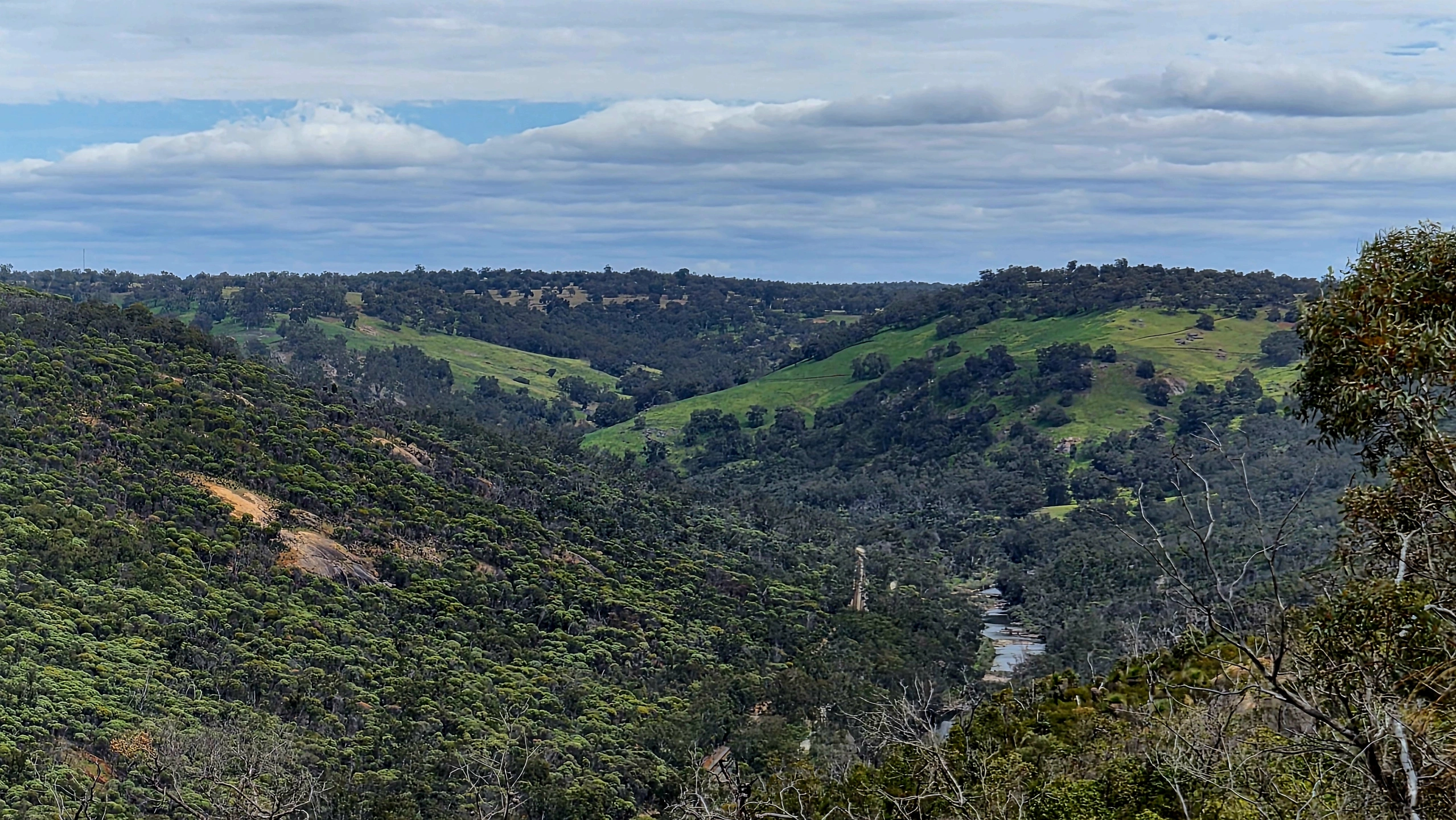
PROTECTED NEXT DOOR — MOONDYNE
South of Julimar lies another remarkable piece of the northern jarrah forest.
Moondyne Nature Reserve has been protected for decades.
Its early management records describe jarrah, marri, powderbark and wandoo forest and recognise its importance within the northern jarrah forest landscape.
And Moondyne does not stand alone.
It adjoins Avon Valley National Park, placing it within a much larger protected landscape stretching through the Avon Valley.
This matters because immediately to the north of Moondyne lies the farmland now proposed for the Gonneville mine.
And beyond that lies Julimar.
Julimar State Forest.
Gonneville.
Moondyne Nature Reserve.
Avon Valley National Park.
These places may have different boundaries and different legal tenures.
Wildlife does not recognise those lines on a map.
BETWEEN TWO CONSERVATION AREAS
The location of Gonneville matters.
Chalice's own environmental referral describes the proposed Mine Development Envelope as bounded by Julimar State Forest to the north and Moondyne Nature Reserve to the south.
The same documents identify significant fauna in both areas, including chuditch, woylie, brush-tailed phascogale and Carnaby's black cockatoo.
And there is another important acknowledgement.
In its own restoration work, Chalice has described the farmland at Gonneville as providing an opportunity to strengthen ecological links between Julimar State Forest and Moondyne Nature Reserve.
More recently, Chalice has said its restoration and offset work is expected to create habitat and vegetation corridors between the two.
That recognition is important.
It confirms that Julimar, the land at Gonneville and Moondyne cannot sensibly be viewed as completely separate pieces of landscape.
There are property boundaries.
There are reserve boundaries.
There are project boundaries.
But ecological connections can cross all of them.
And that brings us to the bigger question:
What does the whole Gonneville proposal mean for the whole landscape?
THE WHOLE LANDSCAPE MATTERS
A mine does not exist in isolation from the landscape around it.
Neither do its roads, power supply, water infrastructure, clearing, traffic or other supporting development.
Gonneville is proposed within a landscape shaped by decades of conservation and recovery.
To the north is Julimar State Forest.
To the south is Moondyne Nature Reserve and the wider Avon Valley conservation landscape.
Between them is the proposed mine.
The question, therefore, is bigger than what happens inside a single project boundary.
It is what the whole proposal means for the environment around it, together, over time.
Western Australia's environmental assessment system recognises this principle. Cumulative impacts must be considered, including the combined effects of a proposal with other past, present and future activities and pressures.
That matters here.
Protecting one part of a landscape should not simply mean transferring environmental or community impacts somewhere else.
The landscape needs to be understood as a whole.
Because that is how nature experiences it.
STILL WAITING
There is something difficult to ignore in Julimar's story.
For decades, governments have recognised its conservation value.
The forest has regenerated.
Threatened wildlife has been returned.
Old-growth forest remains.
Its importance within the wider landscape has become better understood.
Yet the major proposal to give Julimar stronger conservation tenure has remained unfinished.
Government planning records trace that proposal back to the 1994–2003 Forest Management Plan, or earlier.
Decades later, its recorded status was still:
NOT STARTED.
Julimar did not spend those decades standing still.
It spent them recovering.
Perhaps the question now is not simply why the protection never happened.
It is what we choose to protect after more than 30 years of waiting.

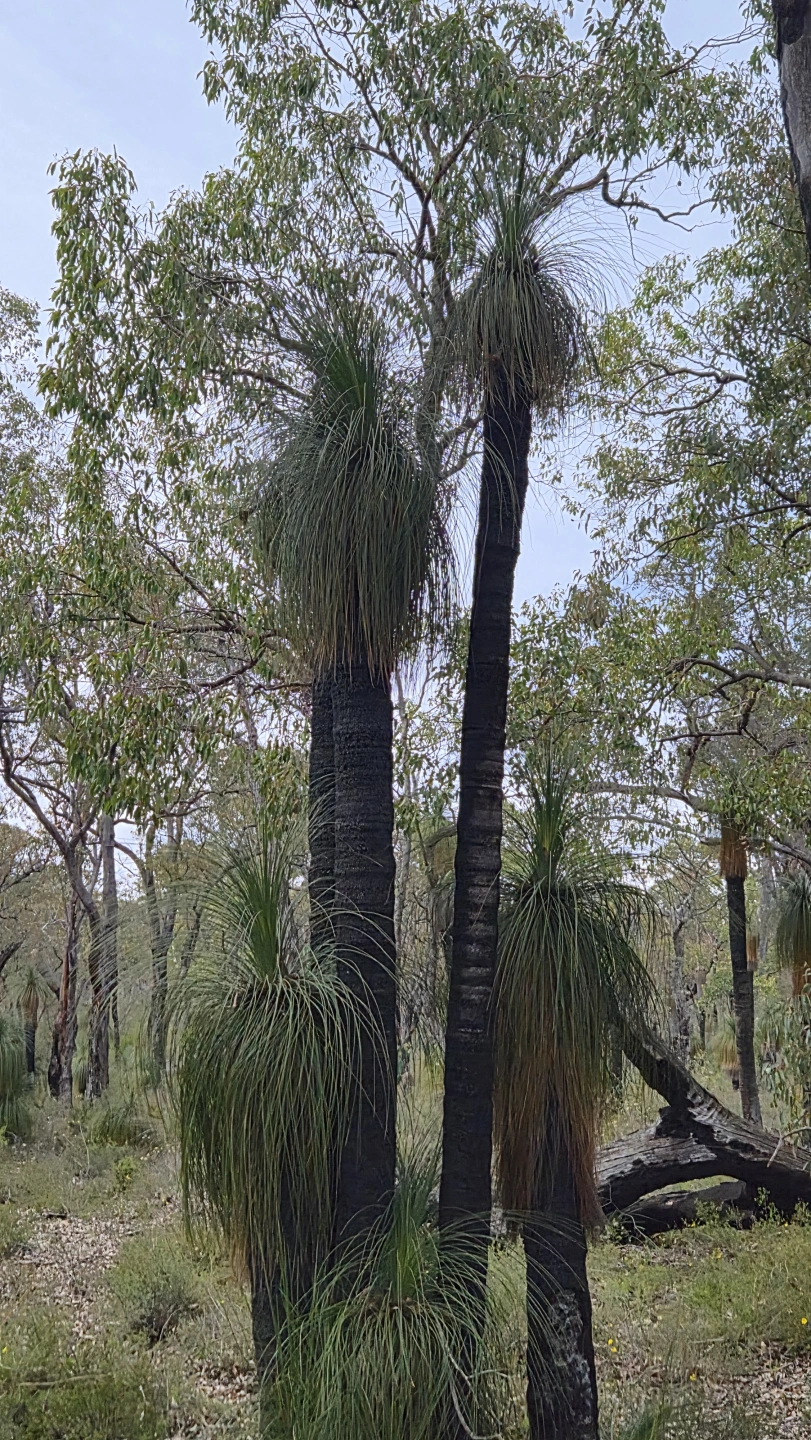

LET THE FOREST GROW OLD
Julimar has already been given something increasingly rare.
Time.
Time for cleared land to regenerate, for logged forest to recover, for trees to mature and for wildlife populations to return.
Time for an ecosystem damaged by the past to begin rebuilding itself.
Some of today's recovering forest may become the old-growth forest of future generations.
That process cannot be hurried.
It cannot be manufactured.
And it cannot simply be recreated somewhere else overnight.
For more than 30 years, stronger conservation protection for Julimar has remained unfinished.
The forest did not wait.
It kept growing.
It kept recovering.
It kept becoming more valuable to the generations that will inherit it.
Julimar's future deserves to be considered as carefully as its past.
More than 30 years of recovery should not be put at risk simply because a major industrial development is now proposed beside it.
No project should be treated as having an automatic right to damage the ecological connections, wildlife habitat and recovering landscape that generations before us have allowed to survive.
Those values took decades — and in some places centuries — to create.
They deserve more than a boundary drawn on a map.
Let Julimar grow old.